
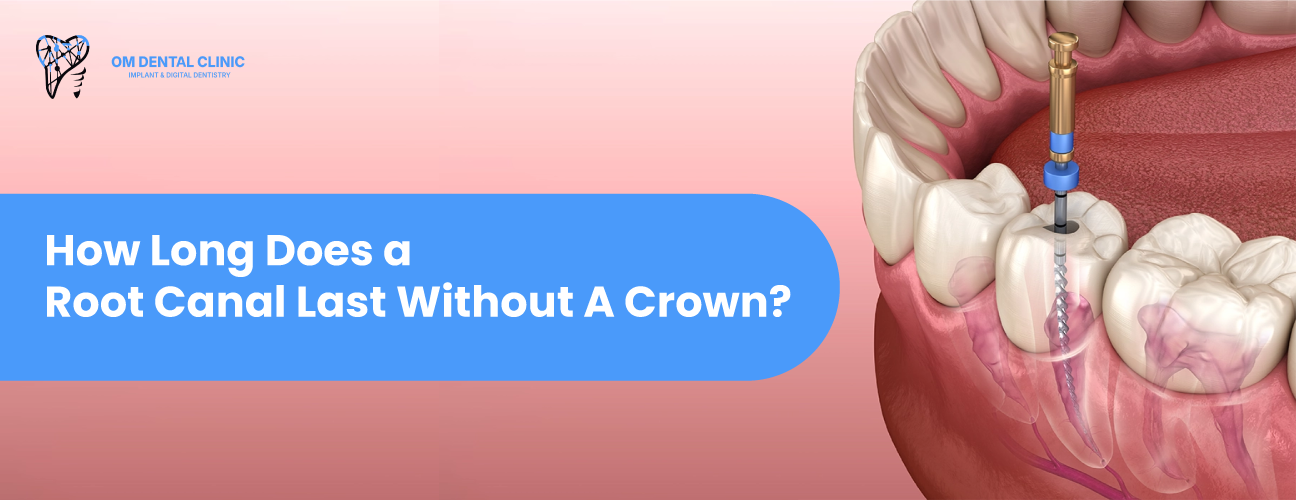
A root canal is done to remove infection from inside a tooth. The dentist cleans it, seals it, and stops the pain. For many people, that feels like the end of the problem. But dentists usually suggest a crown after that, and patients often ask why. The big question comes up sooner or later. How long does a root canal last without a crown, and can the tooth really survive on its own?
Some teeth do last without extra protection, at least for a while. Others don’t. The answer depends on many small things that patients don’t always notice right away. So let’s slow it down and explain it in simple terms.
This is where things get realistic. On average, a tooth may last a few months to a few years without a crown. That range is wide for a reason. Tooth type, bite pressure, and habits all matter.
Front teeth usually last longer without a crown. They don’t take heavy chewing force. Back teeth, on the other hand, face constant pressure. For them, how long a root canal lasts without a crown is often answered with not very long.
Factors like teeth grinding, large fillings, and even diet affect survival. Some patients are lucky. Others are not. Realistically, going without a crown is a risk, not a plan. If you’re unsure about your case, get clarity early. Get an expert diagnosis.
After root canal treatment, the tooth changes. A lot, actually. During the procedure, infected pulp is removed from inside. That pulp once gave moisture and strength to the tooth. Once it’s gone, the tooth becomes dry over time.
Another issue is loss of natural tooth structure. Decay and drilling remove parts of the tooth before and during treatment. So the tooth left behind is thinner. Brittle is the word dentists often use, and it fits. Compared to a healthy tooth, an RCT tooth cannot handle the same chewing force.
A natural tooth bends a little under pressure. A treated tooth doesn’t. That difference matters when you chew daily food, not even hard stuff. This is why protection is discussed so seriously after treatment.
Some teeth really should not wait. Molars and premolars are high-risk because they do most of the chewing. Teeth with large cavities already have less strength to begin with.
Cracked teeth are another concern. Even tiny cracks can spread fast after treatment. Teeth that have had multiple restorations also fall into the urgent group. There’s often very little natural tooth left to support chewing.
In these cases, skipping a crown is more like delaying a problem than avoiding one.
Not placing a crown can lead to several issues over time:
Once a tooth cracks badly, saving it becomes difficult. Sometimes impossible. That’s the part patients wish they had known earlier.
Your tooth usually gives warnings before failing. Pain while chewing is a common one. Visible cracks or dark lines are another sign that shouldn’t be ignored.
Discoloration of the tooth can mean weakening. Sensitivity that returns after months is also a signal. Food getting stuck repeatedly or fillings feeling rough are small but important clues. When fillings start coming off, the tooth is asking for support.
Not every tooth needs a crown right away. A front tooth with minimal decay may survive well with just a filling. Strong enamel around the tooth helps a lot.
If the access cavity made during treatment was small, strength loss is less. In children or teenagers, dentists sometimes delay crowns because jaws are still growing. Each case is judged carefully.
Even in these situations, regular check-ups matter. Skipping follow-up can change the outcome.
If a crown is delayed, care becomes important. Avoid hard foods like nuts or ice. Chew on the opposite side when possible. Use fluoride toothpaste to support enamel.
Temporary fillings need attention too. If they feel loose or rough, see your dentist quickly. Avoid using the treated tooth to bite or tear food. Small habits help reduce risk during this waiting period.
Crown placement is not just about covering the tooth. Accuracy matters. Bite correction prevents future pain. Material choice matters too. All of these Zirconia, Ceramic, and PFM crowns are used for different purposes.
An experienced dentist will look at the aspects of alignment and pressure, keeping in mind long-term comfort. Dr. Komal Majumdar focuses on precision and durability that help crowns last longer and feel natural.
Patients visiting a dental clinic in Koparkhairane often ask about durability. With the right approach, results are more predictable.
So, how long does a root canal last without a crown? Sometimes longer than expected, sometimes not at all. The risk of fracture stays high, especially for back teeth.
Crowns are about long-term protection, not urgency selling. If you’ve had root canal treatment in Koparkhairane or nearby, a consultation can help you decide the right timing. OM Dental Clinic focuses on protecting treated teeth so they last, comfortably and safely.