
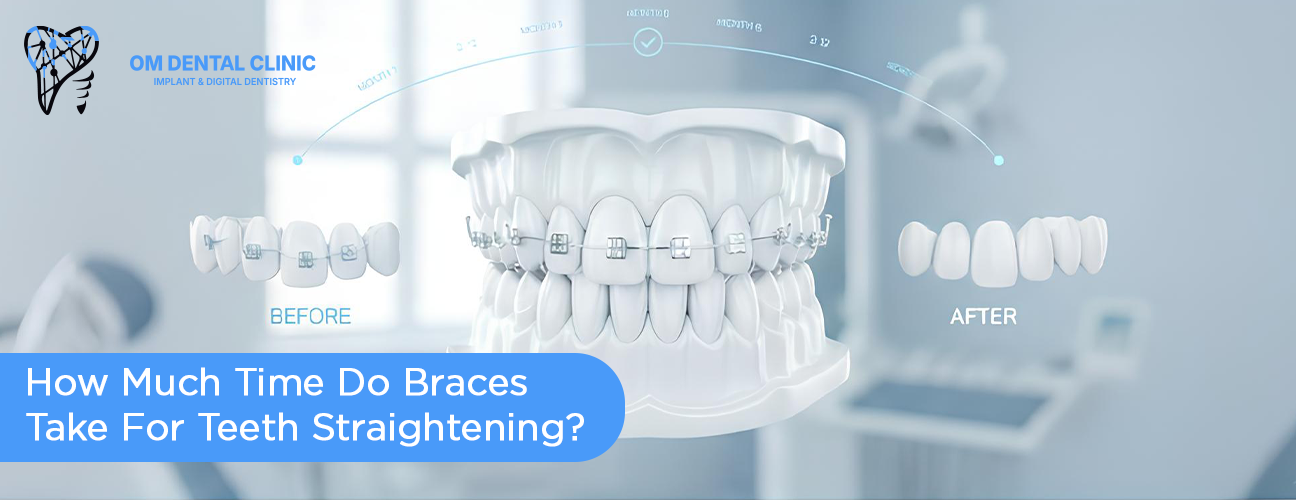
Braces usually take 12 to 24 months to straighten teeth. Mild alignment issues may take 6–12 months, while complex bite problems can take 18–36 months, depending on age, tooth movement, and the type of braces used.
People usually ask about time before they ask anything else. How long will it take? When will the braces come off? Is it months or years? When someone asks how much time braces take to straighten teeth, the question is really about planning life around treatment.
The truth is, there’s no single answer that fits everyone. Alignment, bite issues, age, and the type of braces all play a role. This blog explains how braces work, what affects treatment time, and what to expect at each stage. If you’re also exploring invisible braces in Koparkhairane, the same timelines generally apply.
Braces don’t push teeth suddenly into place. They work slowly. A small amount of pressure is applied, then adjusted over time. This force directs the teeth in a definite direction.
When teeth are relocated, the associated bones adapt to the new location of the teeth by altering their shapes. This process takes time. That’s why adjustments are spaced out over weeks. Each visit moves things forward a little. Rushing this process isn’t safe, which is why orthodontic treatment always follows a gradual approach.
The condition of the teeth at the beginning matters a lot. More misalignment means more movement, which means more time. Bite issues can also extend treatment since they affect how teeth meet, not just how they look.
Age is another factor. Teenagers often see quicker movement because their jaws are still developing. It is possible to get good results for adults, but the process could be slower.
Good oral hygiene is important, and it can affect the treatment process. Healthy gums help teeth move properly. Missed appointments can slow things down since adjustments are part of the process.
In some cases, existing dental treatments may need evaluation first, such as understanding is cap necessary after a root canal before starting braces.
The type of braces used is also another factor. Choosing a reliable dental clinic helps keep treatment monitored and on schedule.
Various braces tend to have slight effects on timelines. Metal braces have been widely adopted and are very effective for most persons. They are especially welcome in complex procedures due to their control.
They are less visible because they match the color of your normal teeth. Treatment time approaches that of traditional braces. Invisible braces are common because they are removable. For mild to moderate cases, they can be effective, but only when worn as advised.
Many patients considering invisible braces Koparkhairane choose them for comfort, but consistency matters a lot.
People often want to shorten treatment time. Some things do help. Following instructions competently is just one of the basics. Wearing elastics as advised and using aligners for the recommended hours keeps progress steady.
Modern orthodontic planning tools also help improve efficiency. Still, teeth require a period of time to be moved effectively. Just because it can be done quickly does not mean so. It is necessary to control the speed because results are likely to be maintained after treatment.
Treatment can stretch out for a few common reasons. Poor oral hygiene habits can lead to gum problems that could slow progress and lengthen treatment. Broken brackets or loose wires also need fixing before treatment can continue properly.
Missed appointments are another reason. Each visit has a purpose. For aligner users, not wearing trays consistently often leads to delays. These issues may seem small, but over time they add weeks or even months.
Early evaluations are often helpful, especially for children and teens. They allow orthodontists to plan treatment at the right stage. Still, adults can start braces at any age.
If a tooth has undergone root canal treatment, it’s important to know how long does a root canal last without a crown, as untreated teeth may need attention before braces begin.
What matters most is having a plan that suits the individual. Every mouth is different. Taking advice from an experienced dentist will help to develop a plan that’s practical and manageable.
In mild cases, yes. Most treatments take longer because teeth need time to move and settle properly.
They can be for simple cases, but only if worn consistently. For complex issues, timelines may be similar.
Adults may see slower movement, but results can still be very effective with proper care.
Yes. Missed appointments often delay adjustments and prolong overall treatment.
Braces take time. That’s part of the process. The changes are gradual, but often well worth waiting for.
Such treatment, when supplemented with proper planning, regular checkups, and daily care, does not veer off track. Consider visiting a dental clinic in Koparkhairane if you’re thinking of starting braces; it can help you to better understand the timeline involved and select the approach best suited for your case.