
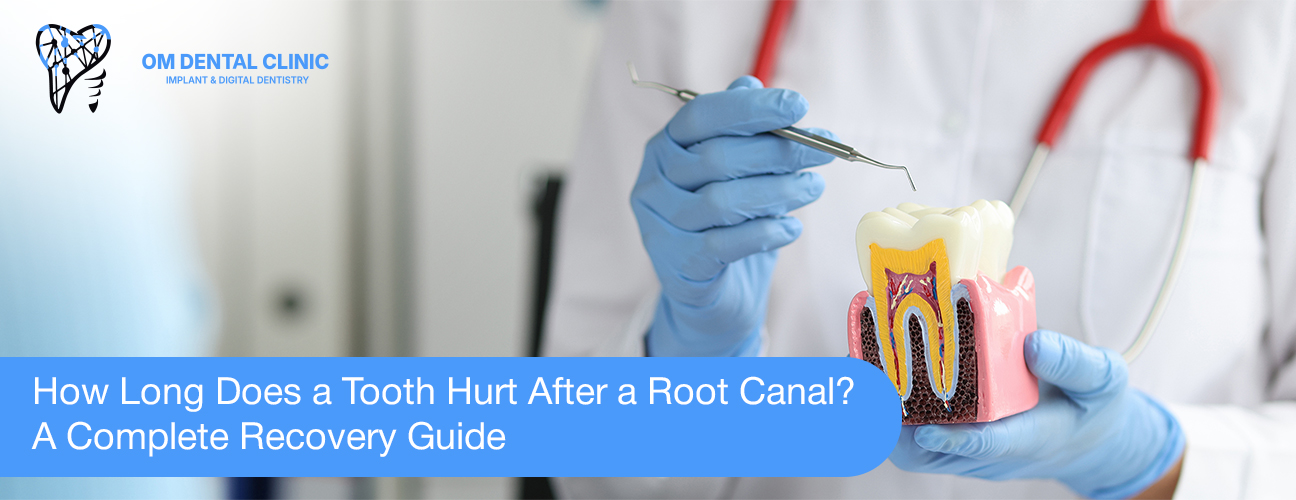
Pain and sensitivity lasting from 2 to 7 days is quite common after having a root canal treatment, and the patient will likely notice significant improvement in their symptoms between 48 to 72 hours following the procedure. Some sensitivity when eating is pretty normal but any significant pain, swelling or other problems should be checked out by a dental professional.
If you’ve just had a root canal or are scheduled to have one, you might be wondering how long it takes to recover and what level of pain is normal. Knowing the typical healing time can help you set expectations, recognize signs of a healthy recovery, and know when to seek professional help.
In this guide, we’ll tell you how long root canal pain lasts on average, what affects recovery time, and what you can do to keep yourself comfortable during your healing journey.
Understanding why you feel discomfort after a root canal helps put the recovery in perspective. Your dentist will take the infected pulp out of the inside of the tooth, clean the root canals and seal them. Even though the nerve inside the tooth is taken out, the tissues surrounding the tooth including the ligaments and gums are very much alive and sensitive.
The mild ache or tenderness you feel after the procedure is your body’s natural inflammatory response to the work that was done. It is not a sign that something went wrong. In fact, for most patients, the pain after a root canal is considerably less than the throbbing infection pain they had before the treatment.
Immediately after your root canal, your mouth will still be numb from the local anaesthetic. Once that wears off, usually within a few hours, you may notice a dull ache or sensitivity around the treated tooth. The gum tissue near the injection site may also feel tender.
This is the day to be most careful. Avoid chewing on that side, stick to soft foods, and take your prescribed or over-the-counter anti-inflammatory medication before the numbness fully wears off to stay ahead of the discomfort.
For most people, days two and three involve the highest level of post-treatment sensitivity. The surrounding tissue is inflamed as part of the healing process. You may notice soreness when biting down or touching the area. Swelling in the gum or jaw is not unusual during this window.
Ibuprofen (such as Brufen or Combiflam) is usually effective at this stage because it targets both pain and inflammation. If your dentist prescribed antibiotics, continue taking them as directed even if you feel better.
By day four, most patients report a clear improvement. The sensitivity when biting begins to reduce, and the background ache becomes less noticeable. During the first week, most patients will find themselves at ease with eating regular foods and engaging in routine activities.
This is not the time for you to miss your appointment. The dentist will have to check on the process of recovery and advise on the way forward, which may include putting on a crown. The crown will protect your treated teeth.
By the second week, most patients are pain-free or have only occasional mild sensitivity. If a permanent crown has been placed over the treated tooth, the recovery is essentially complete. Full tissue healing, however, can take a few weeks longer and some people with more complex cases may notice very mild sensitivity for up to a month.
Not everyone recovers at the same pace. Several factors influence how long root canal pain lasts:
A tooth that had a large, spreading infection takes more time to heal than one caught early. The surrounding bone and ligament tissue need time to recover from the infection that was present before the procedure.
The back teeth, otherwise called the molars, usually have multiple roots and a more complicated canal system, so that the process will be more complicated. In case you wonder how long does a molar root canal take, the process may last longer than the one of the front teeth.
A tooth that remains uncapped after a root canal procedure could be susceptible to breaking, leading to additional problems and possibly even pain. This is why it is generally advised that a cap be placed after a root canal procedure. If you were unsure whether or not a cap was necessary after a root canal procedure, then your answer is yes, in most cases anyway.
Patients with uncontrolled diabetes or a compromised immune system may experience slower healing. Informing your dentist of any health conditions helps them plan your recovery more effectively.
It’s useful to know where the line is between expected soreness and something that needs attention.
Normal after a root canal:
Contact your dentist if you notice:
Worsening pain after initial improvement can sometimes indicate a condition called post-treatment flare-up, or in rarer cases, a missed canal that needs retreatment. Both are manageable but only if you reach out to your dentist promptly.
A few simple steps can make your recovery smoother and shorter:
Do not wait until the pain becomes severe. Taking ibuprofen on a schedule for the first 48 to 72 hours keeps inflammation under control.
Until your permanent crown is in place, the treated tooth is fragile. Biting into hard foods can crack it or dislodge the temporary filling.
Rest supports healing. Elevated blood pressure from intense activity can increase throbbing and prolong sensitivity.
A gentle rinse two to three times a day helps keep the area clean and reduces inflammation in the gum tissue.
The root canal is not complete until the permanent crown is placed. Delaying that step leaves the tooth unprotected and extends your recovery period.
If you are experiencing tooth pain that has been going on for more than a week, or if you have had a root canal and are not recovering as expected, do not delay getting it checked. Early intervention prevents small problems from becoming much larger ones.
Here at Om Dental Clinic, our dental professionals have been providing care for over 25 years for our patients in Navi Mumbai. Whether you need to come in for a root canal evaluation, post-operative care or even just a general checkup, our experienced dentist in Koparkhairane has got you covered.
Our Chief Root Canal Dentist Dr. Amruta Pednekar, alongside our highly skilled dental team will ensure that all your needs are met with the aid of our modern-day equipment.