
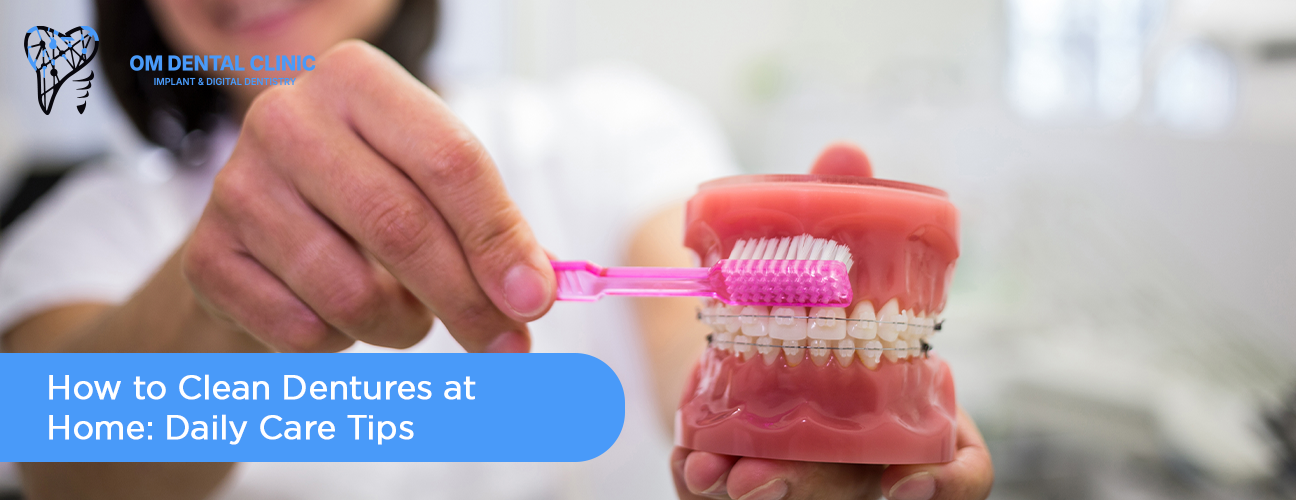
Dentures give you back the confidence to smile, eat, and speak comfortably but only if they are kept clean.
Quick Daily Denture Care Checklist
Removing dentures for at least six to eight hours daily gives your gum tissue the rest it needs to stay healthy.
Good hygiene of your dentures is vital to avoid plaque development, poor breath, staining and oral infections. There are several ways to clean dentures. Denture cleansing tablets and natural home remedies such as baking soda and vinegar are among these, but not all are designed for daily usage. The table below analyses the most popular denture cleaning methods, their optimal uses, recommended frequency, and whether or not they’re safe for your dentures so you can choose the best approach for preserving a healthy, long-lasting smile.
| Cleaning Method | Best For | How Often | Safe for Dentures? |
| Denture cleansing tablets | Daily cleaning | Daily | Yes |
| Soft denture brush | Removing food particles | Daily | Yes |
| Baking soda | Surface stains & odors | Occasionally | Yes |
| Diluted white vinegar | Mineral deposits | Occasionally | Yes |
| Hydrogen peroxide | Occasional stain removal | Occasionally | Use with caution |
| Mild soap & water | Daily cleaning when tablets aren’t available | Daily | Yes |
Just like natural teeth, dentures accumulate plaque, bacteria, food debris, and stains every single day. This can result in such problems as halitosis, sore and inflamed gums, mouth fungal infections including candidiasis, and early wear and tear of your prosthetic teeth.
On a positive note, it’s easy to clean your dentures, it only takes a few minutes daily, and it doesn’t cost much. This guide walks you through everything you need to know.
Many people assume that because dentures are not natural teeth, they do not need the same level of care. This is a common misconception. Dentures can accumulate bacterial plaque in exactly the same way as the natural dentition. If the denture is not cleaned appropriately, accumulated biofilm can contribute to problems such as denture-related stomatitis, a painful inflammation of the gum tissue beneath the appliance.
Beyond infection, poorly cleaned dentures tend to stain permanently, develop persistent odour, and lose their fit over time as hardened deposits change the surface. Cleaning them properly protects both your oral health and your investment.
Before you begin, gather the following:
Each time you finish eating, remove your dentures and rinse them under lukewarm running water. This process will remove any bits of food and ensure that debris does not become stuck to your appliance. It is very important that you only ever use cold or warm water. Hot water could cause the acrylic to become warped and ruin the fit of your dentures forever.
This step is simple but important. Dentures are fragile, and a drop onto a hard surface from even a short height can cause cracks or chips. Lay a folded towel on the counter or fill the sink with a few inches of water before you begin brushing. If the dentures slip, they land safely.
Apply a small amount of mild soap or a non-abrasive denture cleaner to your denture brush and scrub all surfaces, the artificial teeth, the pink acrylic base, and any clasps if you have partial dentures. Use gentle, circular motions and make sure to reach the inner side that rests against your gums, as this area tends to trap the most bacteria.
Do not use regular toothpaste. This is one of the most important rules in denture care. Standard toothpastes, including whitening varieties, are formulated to polish hard tooth enamel and contain abrasive particles that will scratch softer acrylic denture material.
Over time, these microscopic scratches create grooves where bacteria and stains take hold and become very difficult to remove.
Prior to replacing your dentures, you should clean your gums, tongue, and palate by brushing gently using a soft-bristled toothbrush. It will help eliminate any bacteria or plaque that accumulates under the denture and maintain your gum tissue health. If you have any remaining natural teeth, brush and floss them as normal, an unclean partial denture resting against natural teeth can accelerate decay.
Most dentures need to stay moist to maintain their shape. Leaving them to dry out can cause the acrylic to warp or become brittle. Every night, place your dentures in a denture-soaking solution, diluted mouthwash, or plain cool water. Overnight soaking not only keeps the material pliable but also kills bacteria that brushing alone may miss.
Always rinse your dentures thoroughly in the morning before putting them back in your mouth. Denture cleaning solutions contain chemicals that should not be swallowed or allowed to sit against your gum tissue.
Dentists recommend removing dentures for at least six to eight hours each day, ideally overnight, to give your gum tissue a chance to rest, recover, and be naturally cleansed by saliva.
Many people question how to clean dentures naturally using common household items. Natural ways can be beneficial to freshen your dentures and remove minor stains, but should be done with caution to prevent damage to the denture material.
The easiest approach to clean dentures naturally is to rinse them in lukewarm water after meals and brush them gently with a soft denture brush. For a home cure, you can use baking soda or diluted white vinegar from time to time to help reduce odours and surface stains on dentures. But steer clear of abrasive cleansers, bleach or harsh chemicals as these might degrade the denture material and impair the appearance.
Dentists still prescribe daily care using a denture cleaning solution or denture cleansing tablets specially formulated for detachable dentures.
Baking soda is a gentle natural abrasive that helps lift surface stains and neutralise odours without scratching the acrylic. You can use it two ways: as a brushing paste by mixing a small amount with water, or as a soaking solution by dissolving one tablespoon of baking soda in a glass of warm water and leaving the dentures to soak for 15–30 minutes or overnight.
One of the most common DIY denture cleansers is baking soda because it has moderately good cleaning properties. This helps in removing stains from dentures and also ensures that there is no smell.
Dentures can be cleaned with the use of baking soda through the following procedure:
Baking soda is less abrasive than many household cleaners, but cleaning regularly can gradually erode away the smooth surface of dentures. That’s why you should use it just sometimes, and not as your major cleaning approach.
Never mix the baking soda with abrasive powders or harsh chemicals as these can harm your dentures.
White vinegar is slightly acidic and is able to break down tartar and mineral build-up, which is common in places that have hard water. Make a solution by mixing equal amounts of white vinegar and warm water and immerse your false teeth in the solution for about half an hour to a few hours.
A typical home remedy to clean dentures is the use of white vinegar, which will aid in breaking down the mineral deposits and reducing the buildup of plaque.
It is safe to clean dentures using vinegar:
Vinegar can assist to remove tartar and plaque but it should not be used as a substitute for your normal denture cleaning practice. Frequent or extended soaking of dentures in vinegar may harm some denture materials, hence infrequent use is recommended. If your dentures have a heavy buildup of plaque or staining which is hard to remove, then it’s always advisable to have them cleaned professionally by your dentist.
Note: Partial dentures with metal clasps should not be soaked in vinegar for a long time. The acidity can corrode and tarnish the metal. For partials with metal components, limit vinegar soaks to 30 minutes and do so only occasionally.
Dissolving two teaspoons of salt in a glass of warm water creates a simple disinfecting soak. Leave your dentures in the solution for 20–30 minutes, then brush and rinse. Salt water is gentle and a good option when other products are not available.
Dilute hydrogen peroxide with an equal amount of water and use this as a soaking solution. It acts as a disinfectant, helps lift stains, and keeps dentures bright. Rinse very thoroughly before wearing.
One thing to avoid entirely is household bleach (unless it is a product specifically formulated for denture use). According to the American College of Prosthodontists, placing dentures in undiluted bleach or leaving them in bleach solutions for more than 10 minutes can cause serious damage to the material. Never use bleach on partial dentures with metal components.
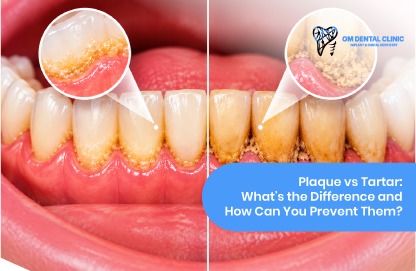
Plaque and calculus build-up can occur in your dentures just like they occur in natural teeth. Failure to take care of these will cause bad breath and increase the chances of getting an infection in your mouth.
To remove plaque from denture:
If tartar has already set on your dentures, do not attempt to remove it with sharp instruments or abrasive cleaners. While vinegar can help remove mild mineral accumulations, heavy buildup of tartar often has to be removed professionally in order to prevent any damage to the denture surface.
It is important to follow an effective regime that will help you not only avoid any plaque and tartar formation but also ensure that your dentures fit well and comfortably.
Partial dentures require all the same daily care as full dentures, with a few additional considerations. The metal clasps that anchor partial dentures to your remaining teeth need to be cleaned carefully and brush gently around them to remove plaque without bending or distorting the metal. Use a denture soaking product specifically formulated for partials with metal, and follow the manufacturer’s instructions, as some products are not designed for overnight soaking with metal components.
If your partial is not cleaned regularly, bacteria can transfer to your natural teeth and accelerate decay. Patients with partial dentures often need to be especially diligent about flossing the teeth adjacent to the clasps.
Partial dentures demand somewhat extra care since they normally have metal clasps and precision attachments for proper positioning of the denture.
To clean your partial dentures at home:
Do not use hot water as this may damage the acrylic part of the denture. Never strain or bend the metal clasps when cleaning. This may damage the fit of your partial denture.
Partial dentures can be uncomfortable to wear, but you can help by keeping them clean. A clean partial denture also helps to preserve your natural teeth and gums from plaque buildup.
Dentures are great and reasonably priced when it comes to getting missing teeth replaced. They will last for a long time provided that you maintain them properly. However, there will come a time when many of you may realize that you need something more permanent than what dentures provide. This is where full mouth dental implants treatment come into play. The dental implants treatment will give you teeth that function just like normal ones without needing removal or any other type of special care.
If you have been considering implants but are unsure about affordability, you may be surprised. The cost of dental implants in India is significantly more accessible than in many Western countries, and the quality of treatment at well-equipped clinics is comparable to international standards. It is worth having a conversation with your dentist to understand all your options.
Soaking dentures in a baking soda solution is generally safe from time to time, but should not substitute an overnight denture cleaner. Denture cleansing tablets are designed to kill bacteria, remove stains and odours and are safe for denture material. Always rinse your dentures well before you put them in.
Hydrogen peroxide can help reduce bacteria and erase some surface stains, but should only be used sparingly and in a diluted solution if prescribed by your dentist. It is not recommended to immerse all types of dentures overnight in hydrogen peroxide. Certain materials may be affected by prolonged exposure.
Most dentures should be immersed in simple water or a denture cleaning solution that your dentist recommends overnight. Some denture materials must remain wet to retain their shape. Never soak your dentures in hot water as this could distort them.
If you don’t have denture cleansing pills, rinse your dentures under lukewarm water and brush them gently with a soft denture brush and mild, non-abrasive soap. Homemade solutions like baking soda or diluted white vinegar can be used occasionally but should not replace regular denture cleaning products for daily use.
A simple solution of diluted white vinegar or a paste of baking soda and water is the safest homemade denture cleanser, used occasionally to remove stains and manage odours. These home cures are best used as complements to the commercial denture cleaning solutions, rather than as substitutes. The commercial solutions are specifically made to clean dentures safely and effectively.
The most meticulous at-home cleaning cannot substitute professional care.
Consult a dentist at the dental clinic in Ghansoli or Koparkhairane in case you experience the following:
Your dentist can provide a thorough cleaning of the dentures, which will help get rid of tartar deposits. According to the recommendations of the American College of Prosthodontists, dentures need to be professionally inspected each year and replaced if they have been used for over five years.
Taking care of your dentures is a small daily habit that pays off significantly in comfort, confidence, and long-term oral health. If you have any questions about your denture care routine, or if you are experiencing discomfort with your current appliance, the team at Om Dental Clinic in Koparkhairane is here to help. Book your appointment today.