
The root canal pain is actually treatable with over-the-counter pain medications, cold compresses, a diet of soft foods, proper oral cleanliness, and following your dentist’s aftercare instructions. Some little discomfort before or after a root canal is usual, but worsening or severe pain can be a sign that something is wrong and you should see a dentist.
If you had a root canal or are recovering from one, knowing what is causing the pain and how to deal with it can make the process a lot more bearable. This guide covers the primary causes of root canal pain, effective strategies to manage discomfort, and when to seek help from your dentist.
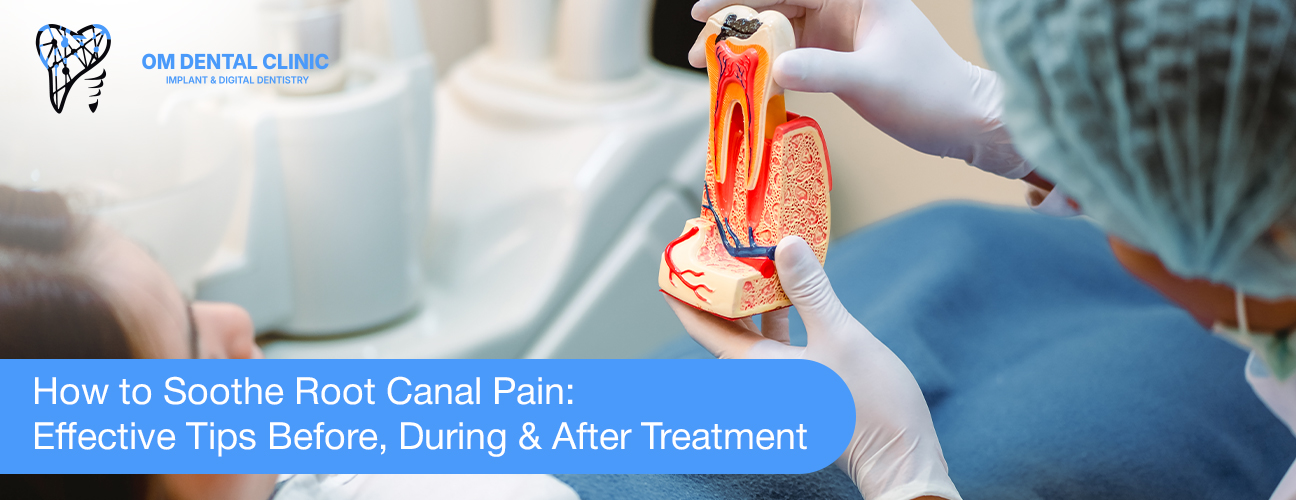
Understanding what a root canal is and what it entails will help you better understand how to relieve pain from a root canal. If a tooth has an infection or serious damage to the inner pulp (the nerves and blood vessels), a root canal is the treatment. The dentist removes the contaminated tissue, cleans up the canals, and seals the tooth.
The good news is that in fact, the hardest discomfort for most patients comes before the root canal, largely from the infection itself. When the infected pulp is removed, the source of pain is gone. It’s common to have some soreness after the operation, but it’s normally minimal and will go away quickly (within a few days for most people).
If your visit is still a few days away, it is crucial to manage the pain in the meantimr. Here are some things you can do:
The initial line of defense should be non-prescription medicines such as ibuprofen (Combiflam, Brufen etc) or paracetamol. Ibuprofen is especially great because it not only knocks out pain, but also attacks inflammation which is a key contributor to the throbbing sensation you have. Always take the suggested dose and consult your doctor if you are taking other medicines.
Exposed or infected dental nerves are very sensitive to heat and acidity. Drinking particularly hot or cold drinks such as tea, coffee, cold water, ice-cream might provoke intense, shooting pain.
Soft drinks, fruit juices and citrus fruits are both sweet and acidic and so contribute to deterioration and irritate the nerve further. Until your treatment is done, stick to soft, non-acidic and lukewarm foods.
Eugenol (clove oil) is a natural antibacterial and local anaesthetic that has been used in dentistry for decades. Dab some on a cotton ball and wipe the excess. Hold it gently against the sore tooth for about 10 seconds. A little bit goes a long way, don’t eat it.
A warm saltwater rinse is one of the easiest and most effective home treatments. Add half a teaspoon of salt to a glass of warm water and gently swish for 30 to 60 seconds. This helps to inhibit the activity of bacteria, reduce swelling and provide brief pain relief. Take two to three times daily.
It may seem paradoxical when your tooth hurts, but it’s crucial to continue brushing and flossing properly. Bacterial plaque creates acid that causes more deterioration and more discomfort. Keeping the area clean may help prevent your condition from getting worse before your appointment.
Some sensitivity and slight soreness are entirely typical after your root canal treatment. This is because the surrounding tissue has been worked over and needs time to mend. Here’s how to get relief from root canal pain while you’re recovering:
Place a cold compress or ice pack (wrapped in a cloth) on your cheek (not on your tooth) for 15-20 minutes after the treatment to numb the area and reduce swelling. You can do it in the first 24 hours for optimal effect.
Your dentist may recommend medication or you can continue with ibuprofen as directed. These drugs help to minimise swelling in the tissue around the treated tooth which is the main source of discomfort following the surgery.
Lying flat can cause blood to collect in your head, which may aggravate throbbing and discomfort in the area of the treated tooth. Sleeping with one or two extra pillows to prop yourself up will alleviate this discomfort and help you sleep more peacefully.
The treated tooth is delicate until your permanent crown is fitted. Chewing on hard things might shatter the tooth or dislodge the temporary filling. Eat soft foods that don’t need a lot of chewing. For information on what is safe to eat, we have a full guide on what to eat after a root canal which includes a useful eating plan.
If you can, try to chew on the other side of your mouth. Pressure applied to the treated tooth before it’s totally healed can extend the sensitivity and discomfort.
And continue with your warm saltwater rinses after the treatment, too. They are natural and help maintain the area clean and promote gum repair without any harsh chemicals.
Most patients have slight soreness 2 to 3 days after the treatment. Some have a sensitivity that lasts a week. This is typical and nothing to worry about. If you suffer severe, throbbing or worsening pain after a week, or if you see swelling, fever or discharge, it’s important to call your dentist at once. Find out what’s normal in our special piece on how long a tooth hurts after a root canal.
Home cures may provide temporary relief, but they are not a substitute for expert therapy. If you have any of the following, make an emergency appointment:
If you are in pain and think you may need a root canal, do not put off treatment. Early intervention makes all the difference in both saving the tooth and decreasing pain.
Our skilled team at Om Dental Clinic uses modern technology and innovative techniques to guarantee that your root canal treatment in Koparkhairane is as comfortable and effective as possible. You are in the hands of highly competent professionals under the supervision of Dr. Komal Majumdar, a Diplomate of the American Board of Oral Implantologists with a Postgraduate Certificate in Endodontics and Dr. Amruta Pednekar, our Chief Root Canal Expert.
We believe no patient should have to suffer longer than necessary. Schedule your appointment today and let us help you find relief.